Reminiscings from the Roof of the World
Faces in the Mountains
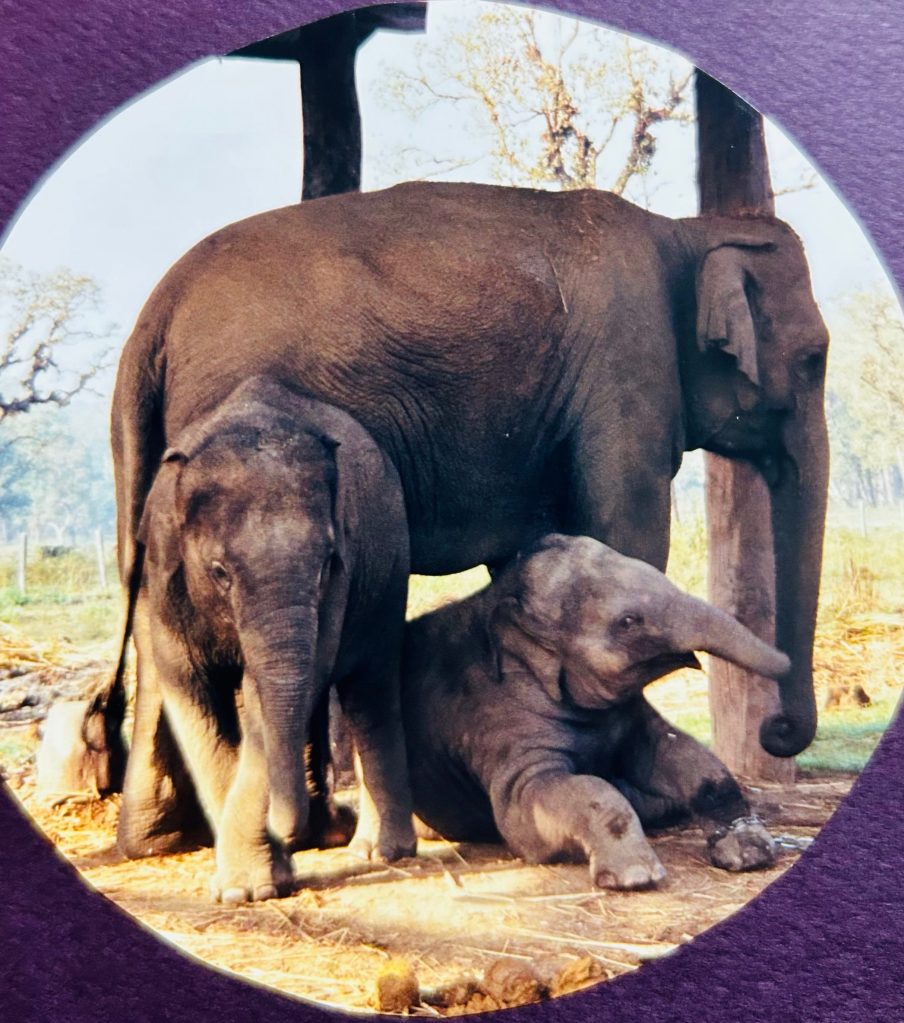
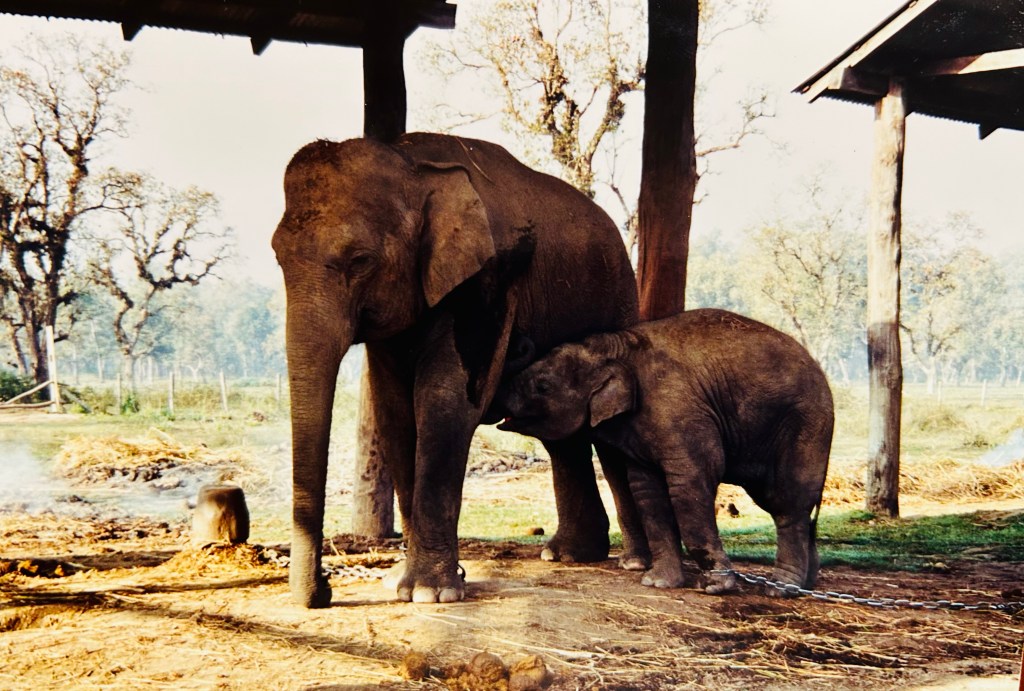
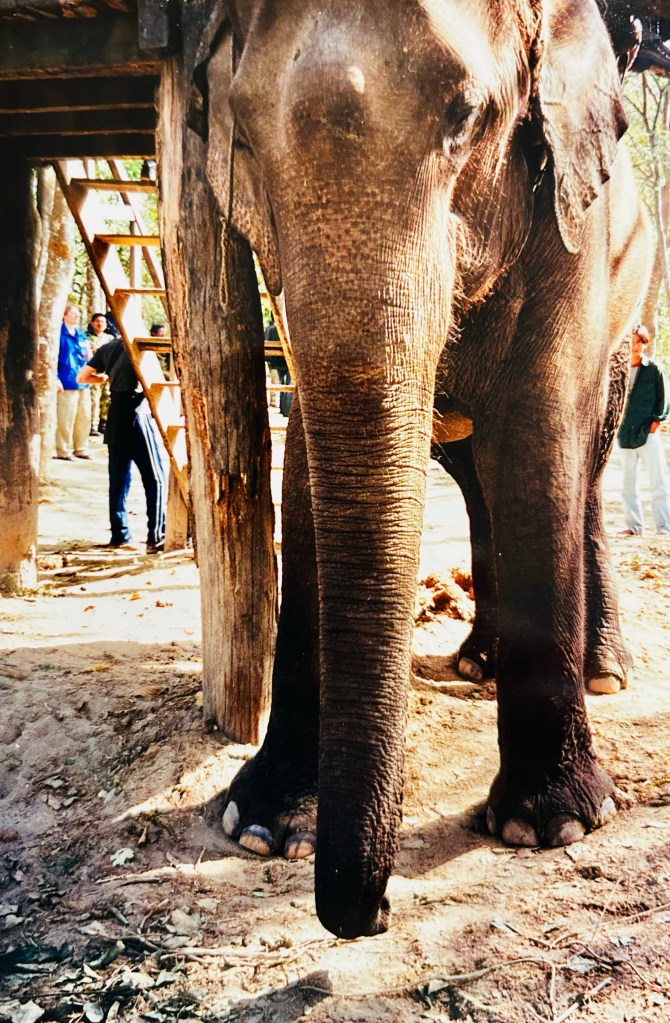
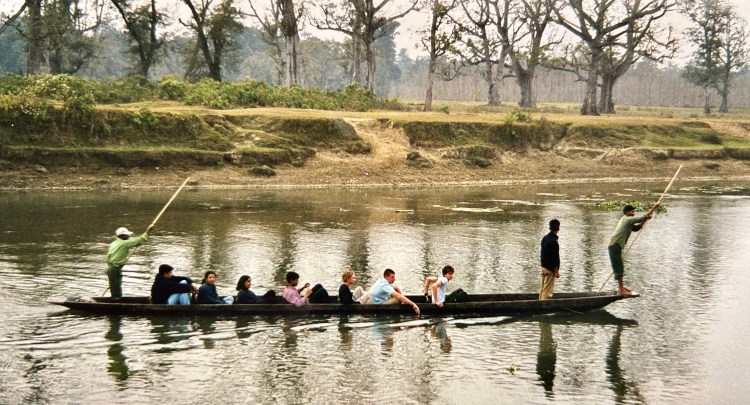
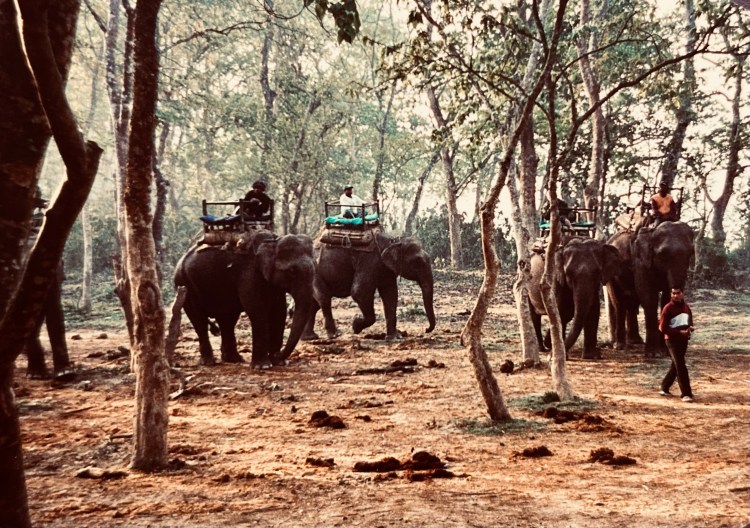
Tuesday – Wednesday, March 7-8. There are two breeding centers in the world for Asian elephants. One is in Sri Lanka. The other is in Chitwan, Nepal. So, Tuesday morning before heading north we visited the local elephant breeding center. There are three major differences between the two African species and their Asian counterpart. 1) African elephants have much larger ears shaped like the African continent. Asian elephants have smaller, roundish ears. 2) Asian elephants have two “domes” atop their head while the African species’ heads are rounded. 3) Only male Asian elephants have tusks; both male and female African elephants can bear tusks.
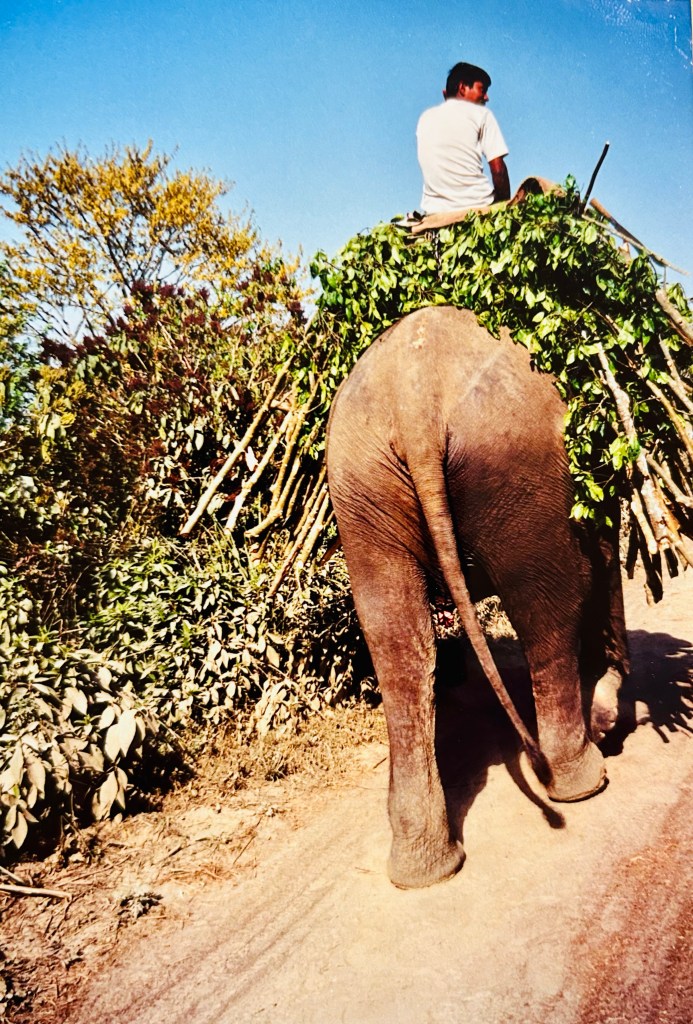
It was absolutely fascinating to see so many elephants, from babies with their mothers to enormous males. While we needed to exert caution with the large males we were able to walk right up to the female and young animals and even touch them. The elephants are bred and raised there, then exported; many are trained to work and then sent to India.

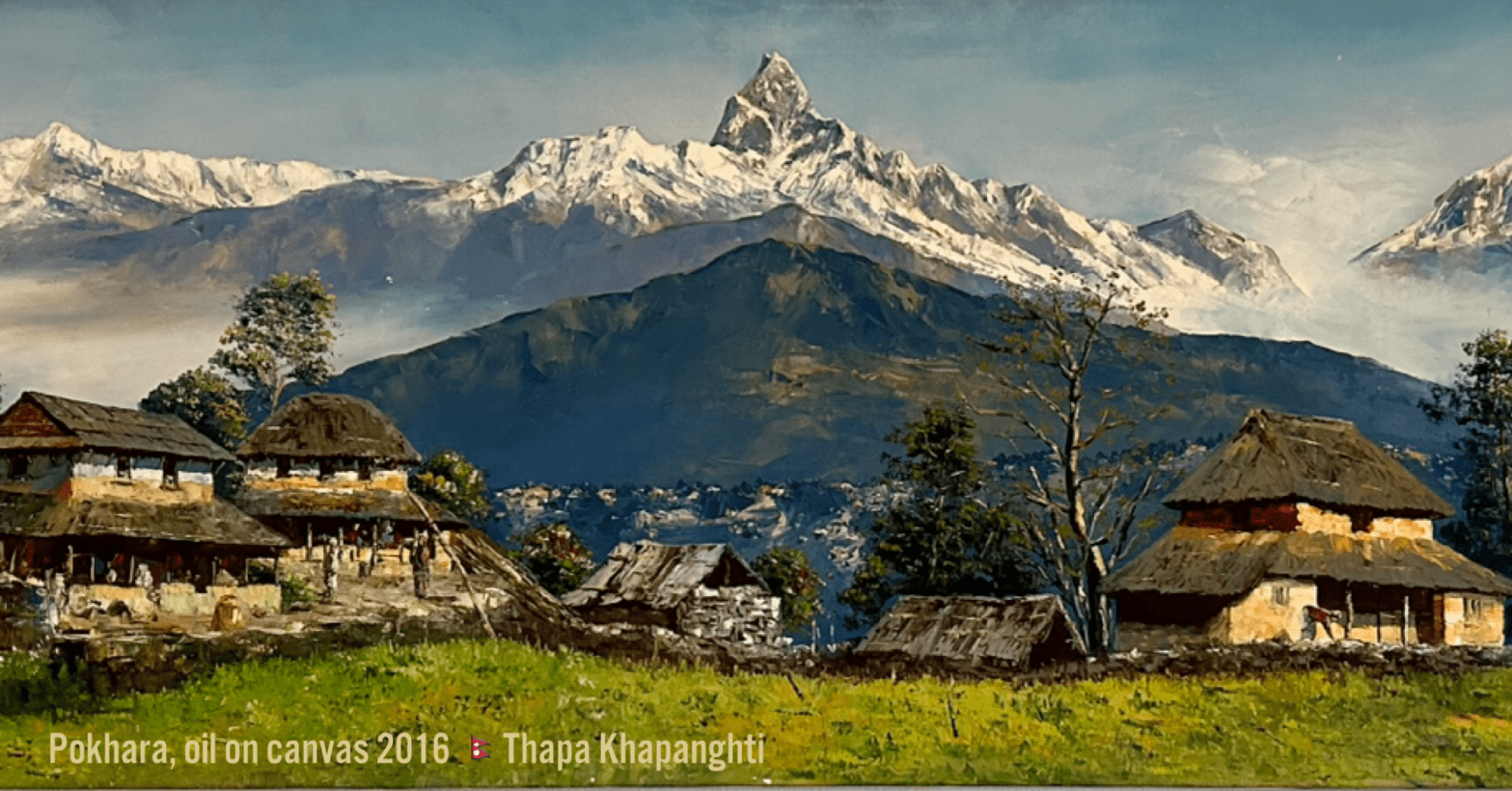
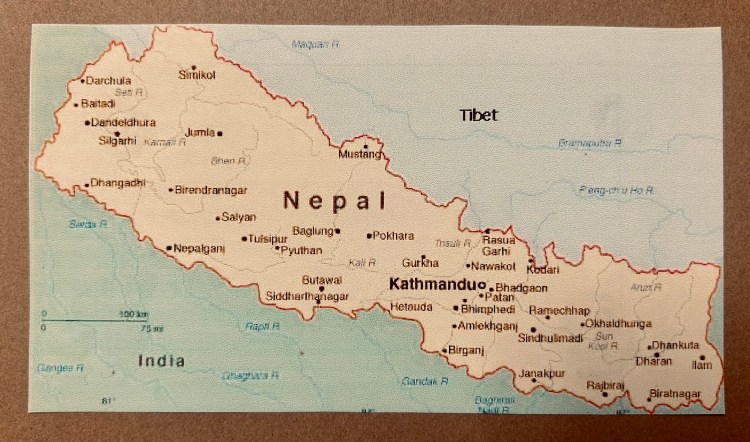
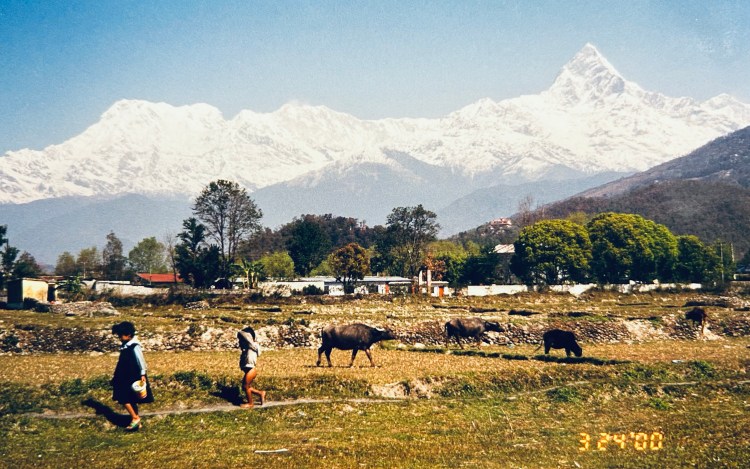
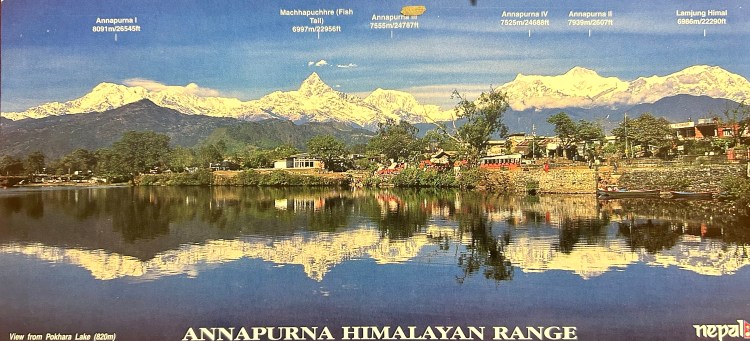
At midmorning we headed north and late afternoon arrived at Pokhara, the second most populous city of Nepal located 120 miles (200 km) west of the capital city, Kathmandu. Pokhara is situated at the foot of the Annapurna Range of the Himalayas at a steamy elevation of 2700 feet (822m). Holly, Vivian, and I passed the evening browsing the multitudinous vender stalls amazed at the variety of practical as well as beautifully exotic items. Many of the stalls sold trekking and outdoor gear, much of it used and discarded by exiting trekkers and climbers. There were also a plethora of “knockoff” bags, purses, and gear bearing incredibly accurate fake labels of well known and expensive brands. I found a used sleeping bag and assumed it was an imitation North Face bag. On examination it appeared well made and of quality materials. As I had been cold one night in the jungle I was pretty sure that I needed more than my light blanket and sheet for the snowy heights we were about to scale. So after some bargaining I purchased it for $31.50. Well, twenty-three laters I am still using that bag which still looks “like new” and am pretty sure that it was the real deal! I also found a “Lowe” daypack with hip support for $15. I snatched that up as well because I had already determined I was not able to carry the backpack that my husband had given me which was huge, made of canvas with a metal outer frame and weighed several pounds empty. I donated it to the Nepali team who used it to carry supplies (and also struggled with its weight, I might add).
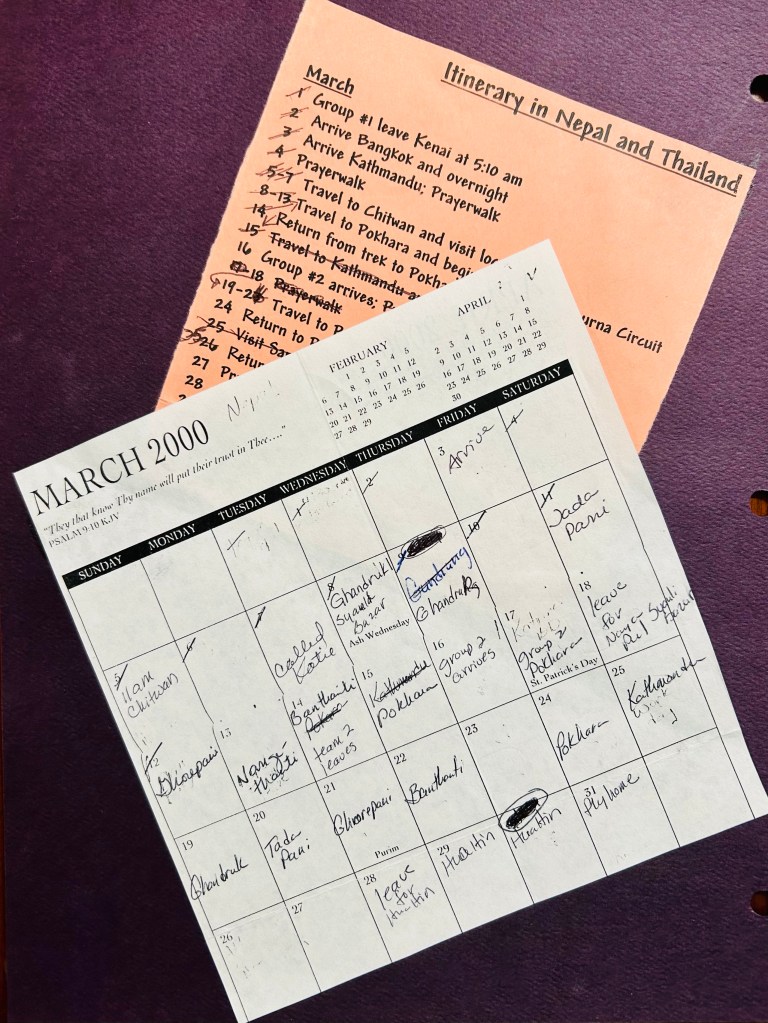
Wednesday, March 8, 2000 was perhaps the most exciting morning I have ever awakened to. Finally after so many years of dreaming and praying and yearning today I would begin my trek up the mountains of the Roof of the World. I was verging on being euphoric. But nerves were there too, what if the trek was too hard for me? And I was wondering what God was going to do. I imagined it being a bit like prayer walking in my neighborhood at home praying for the families, the community, and however I felt God was directing and showing me which sometimes included speaking against spiritual strongholds. What I would see this evening was lightyears beyond anything I had ever imagined.
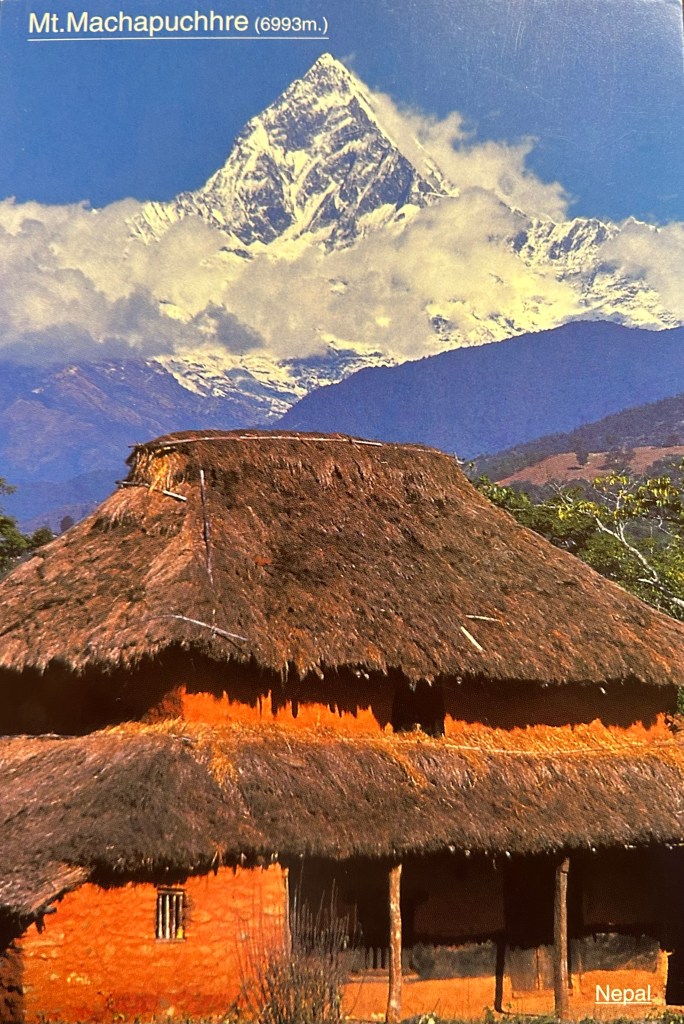
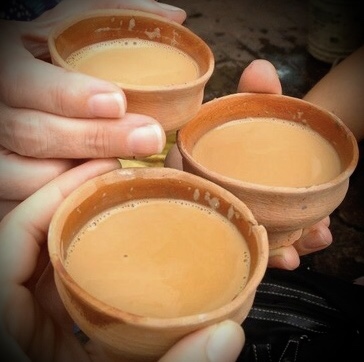
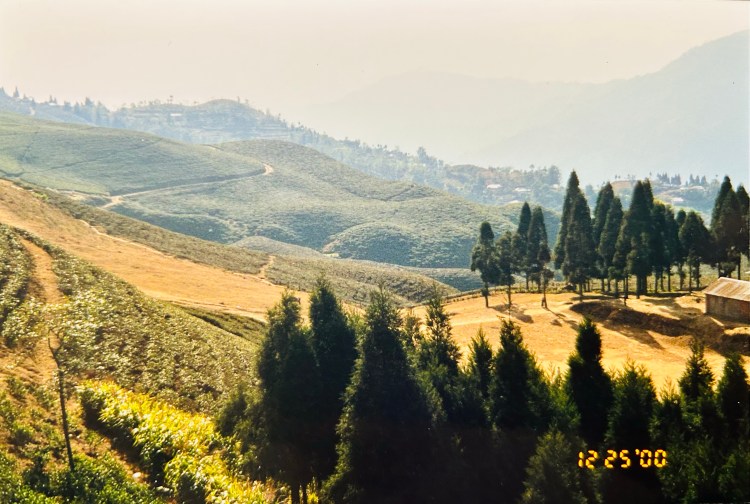
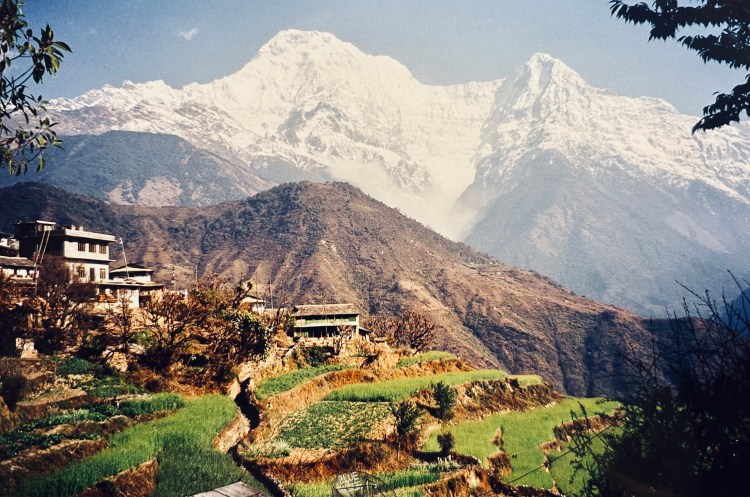
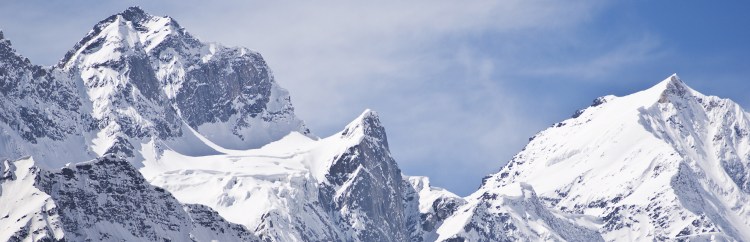
After breakfast and milk tea we loaded up the SUV and drove to Nayapul, the starting point for the Poon Hill Trek and the trek to Annapurna Sanctuary. We quickly unloaded and Mr. G., the driver, headed back to Pokhara. Robbie was leading us as we took to the trail. It was superbly beautiful. The warm morning breeze, the backdrop of snowcapped peaks, mountain streams, spring greenery and flowers at their finest. These eyes were finally beholding my beautiful Himalayan world.
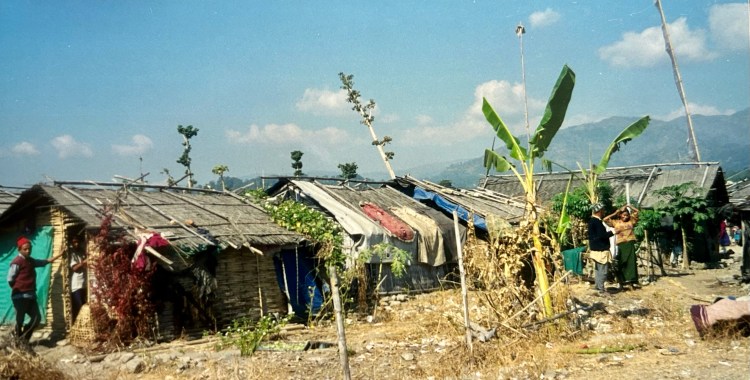
The trek to Shaule Bazar was flat and short, so it was only a couple of hours or so to the tea house where we would sleep that night. Tea houses are common along Nepal’s trekking routes. They are rustic lodgings constructed usually of rough, weathered boards with rooms containing beds made also of rough planks and a thin cotton-stuffed mattress. They also have a primitive kitchen with clay cooking stoves and tables with chairs or benches to feed their guests and other weary travelers passing by. And for the necessary, just outside in the back would be an outhouse—water and a plastic mug provided, bring your own TP.
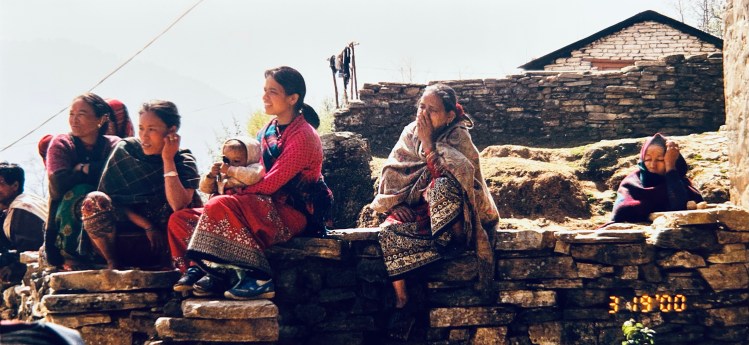
This tea house was owned by a young couple. Previous teams that Robbie had brought this way had talked with the woman and he felt that she was close to receiving Truth. Robbie had asked if we would also give her some time so after lunch we went over to where she was sitting and tried to chat a little. Her child was playing with a stuffed bear that played a tune in a language that sounded to me like Chinese. I didn’t understand the words but the melody was unmistakeable: “Be careful little eyes what you see, be careful little eyes what you see, for the Father up above is looking down in love be careful little eyes what you see.” I could hardly believe my ears! God is so faithful to provide a door! I asked if she understood the song and she said no so I explained the words and their meaning—that there is a loving God who always watches over and cares for us. Her reaction was positive but she didn’t give me a chance to say more.
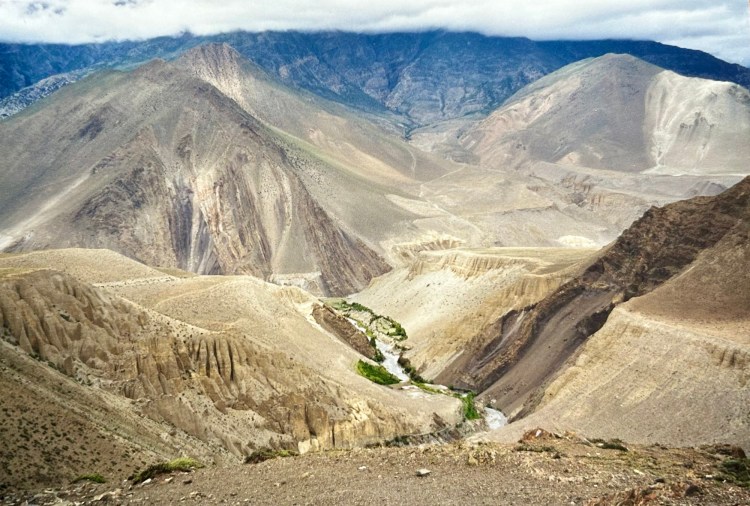
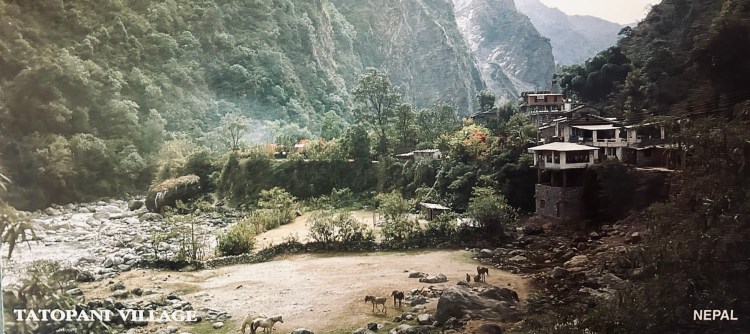
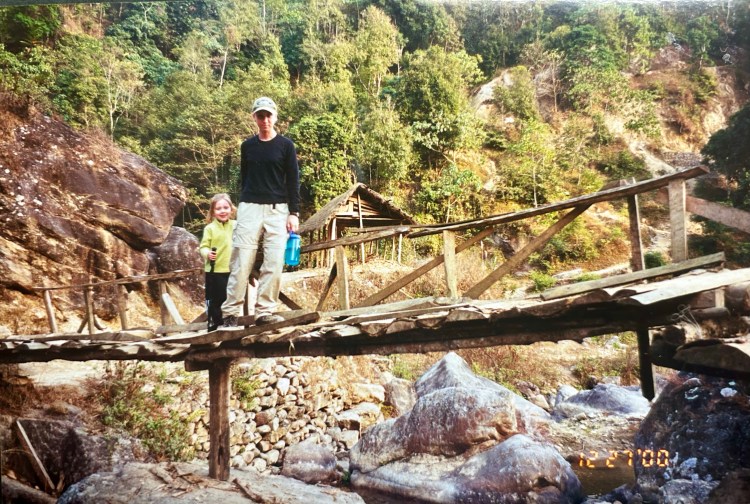
We three Americans then went on a prayer walk through the village. The path from the tea house onward was starting an upward incline and at the end of the village became very steep. There was a river running swiftly to our right behind the teahouse with mountains beyond the river. The left side was also mountainous as was the north straight ahead, three mountainous sides, only the south behind us was open. One hundred feet or so past the tea house there was a small footbridge across a stream which ran from the mountains on the left and emptied into the river on the right. As we were crossing the bridge a Nepali woman passed us. Holly and I were looking around at the beautiful panorama when Vivian said, “That lady’s face is badly bruised!” We stopped, shocked, wondering if we should do something. Then Holly, pointing to one of the mountainsides on the left said, “There is a face in the mountain!” I turned to look and quickly saw the image created by wind, rain and erosion, and the natural rocks and vegetation. The face had a chilling expression and I immediately recognized it as something spiritual. Holly agreed. I stood and prayed for a minute and realized that it was the spirit of violence. Vivian said, “Yes, and also anger.” And then just to the right of violent anger we saw the face of fear with a horribly terrified expression.
Feeling astounded and in total awe that God had opened our eyes to discern the images we started walking again keeping our eyes glued to the mountains on our left. It was an overcast day but as we walked just a bit forward the sun suddenly popped out through a small break in the clouds and shined directly onto the next mountain—right onto the 3D face of the spirit of darkness hiding in a cave. Just as quickly the clouds moved back to hide the sun and the face was no longer visible. We prayed again and felt God was saying that He would shine His Light in this valley and break the darkness.
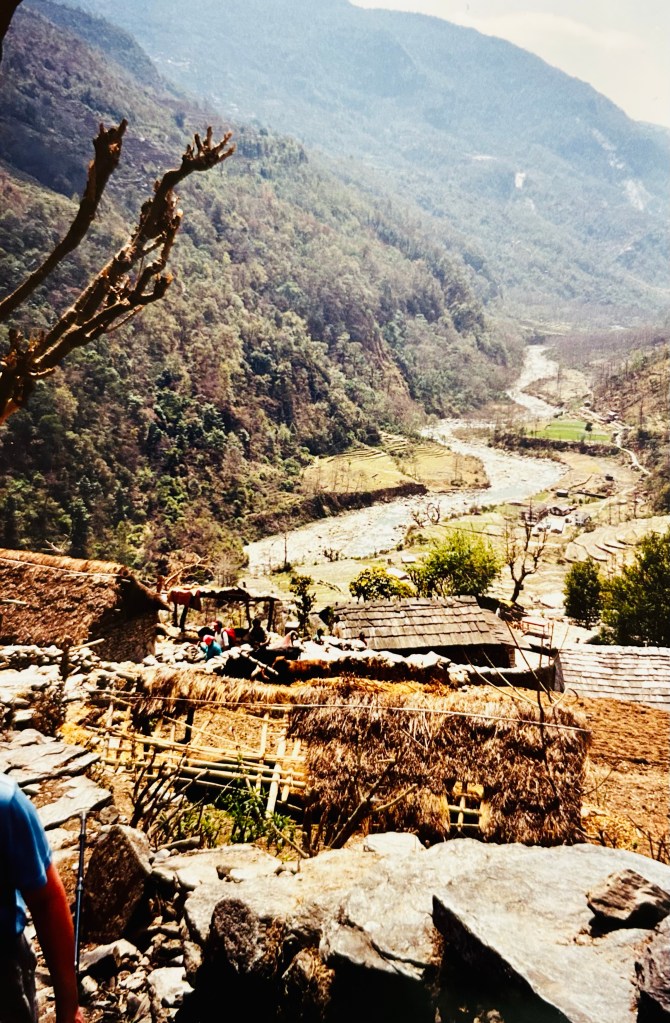
We walked up a little farther to the end of the village where there was a ledge overlooking the valley and we sat down to pray. Across the span of mountains straight ahead to the north I saw what looked like long, vertical claw marks. As I prayed I felt they represented the devourer. As we looked to the east there was a stone shrine, man built, on one of the mountainsides that I felt embodied the spirit of death. A little south of the shrine we saw what looked like Buddha eyes, representing bondage. Farther south was what looked like a cat mask which represented deception. And finally to the far southeast was a face that filled much of that hillside. It was styled in a way that reminded me of “The Scream” by artist Edvard Munch. It was grotesque and the moment was surreal. We prayed about that one for a while. Finally I felt that the Holy Spirit was showing me that its name was false religion. Inside the face of false religion were two more faces, eternal torment and eternal destruction/damnation.
We had spent a good two hours praying through the village and God had opened our eyes to a total of eleven ruling principalities in that valley. The faces were formed on the mountainsides with elements of nature—trees, shrubbery, boulders, and erosion gullies and lines. The next morning when we pointed them out to our Nepali friends they could see them clearly and were amazed that no one had seen them before. They said the hair on their necks was standing up at seeing the images and I agreed, the atmosphere was eerie. Suddenly a book I had read came to mind, The Twilight Labyrinth: Why Does Spiritual Darkness Linger Where It Does? by George Otis Jr. In it Otis states that spiritual principalities rule where they have been invited in some manner, intentional or not, by human behaviors and activities, and that annual festivals in celebration of darkness give them permission to remain and grow stronger. He also says that in some places in the world the strongholds are so entrenched and the devil is so proud that he has literally etched his face/image there. When I read that I could not quite picture what he meant. But now, here, it appeared that by God’s providence we had stumbled onto one of those places. In the days to come we would find more faces along the trail but in no place so many as in Shaule Bazar. I asked God why that place and I believe he said that it was because Shaule Bazar was the gateway to that region.

On returning to our tea house we were served what would be our staple meal for the next few days, noodle soup made with packaged raman in a delicious broth with greens plucked from the ground just outside the kitchen door. As we were now past the boundaries of electrical service we ate by candlelight. I watched carefully as the candles were lit, held for a few seconds and then tipped so that a drop or two of melted wax fell onto the wooden table. Then the base of the candle was pressed into liquid wax which quickly hardened and held the candle firm. I would mimic that technique every evening as we each would receive a candle to light our way to our room for the night. That evening as I snuffed out my candle which was firmly stuck onto the window sill of our shared room and crawled into bed I had feelings that I don’t have words to describe. I prayed thanking God for what He had shown us and asked Him for guidance and protection as we continued the journey that had only just begun.




 Coffee, Tea, and Reverie
What an exciting journey! I can hardly wait for the next entry! This should become a book.
LikeLiked by 1 person
😊 Thank you; you are very kind!
LikeLike