
Kolkata, India 2012

In October of 2012 Katie, my daughter, and her friend came halfway around the world to visit me. They traveled from Oklahoma to Dubai and passed their layover riding camels and exploring desert dunes. From there they traveled to Kathmandu, Nepal where Katie spoke at Himalayan Ezra Institute’s tenth anniversary. Their next stop was my home in Kolkata (Calcutta), India.

During that entire journey Katie had been hauling two big, blue totes full of wonderful delights for me. When she arrived I excitedly tore into the totes which were filled with too many goodies to name. There was stuffing mix and cranberry sauce for the upcoming Thanksgiving feast, packages and packages of Reece’s Cups sent from a friend in Alaska to bring me joy in my day-to-day, and most importantly there were gifts from America for my five classes of students. As I write this I am once again overwhelmed with the love that motivated such effort to indulge me.
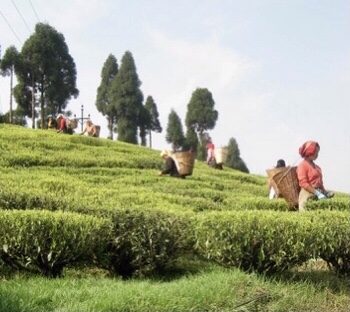
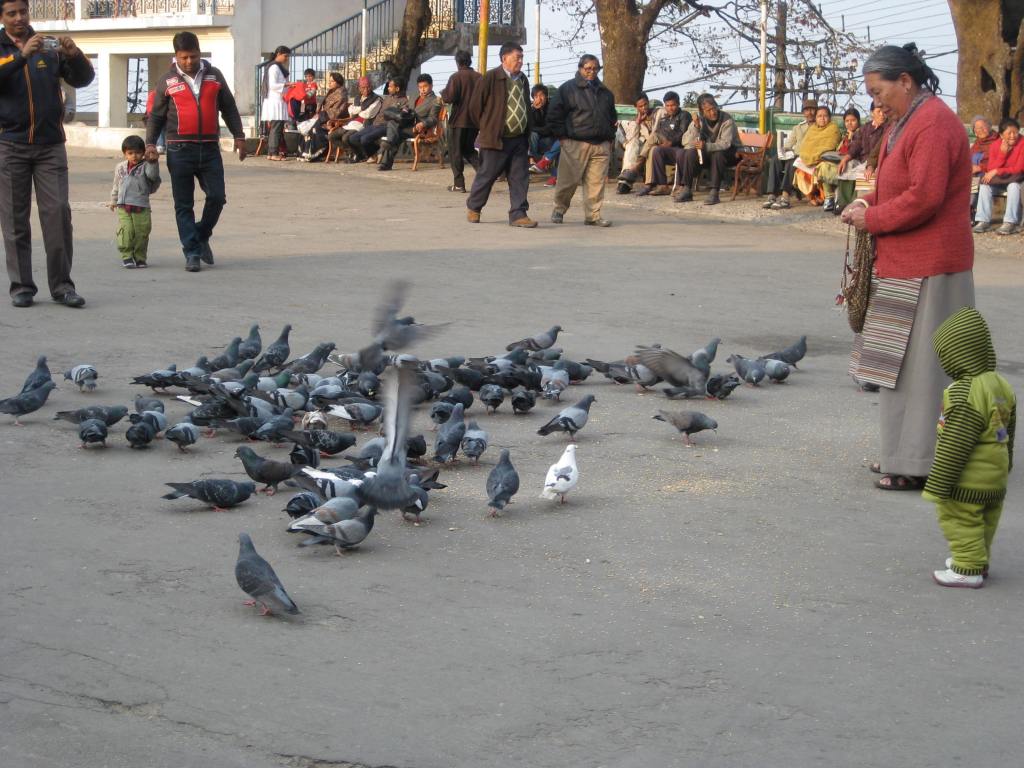
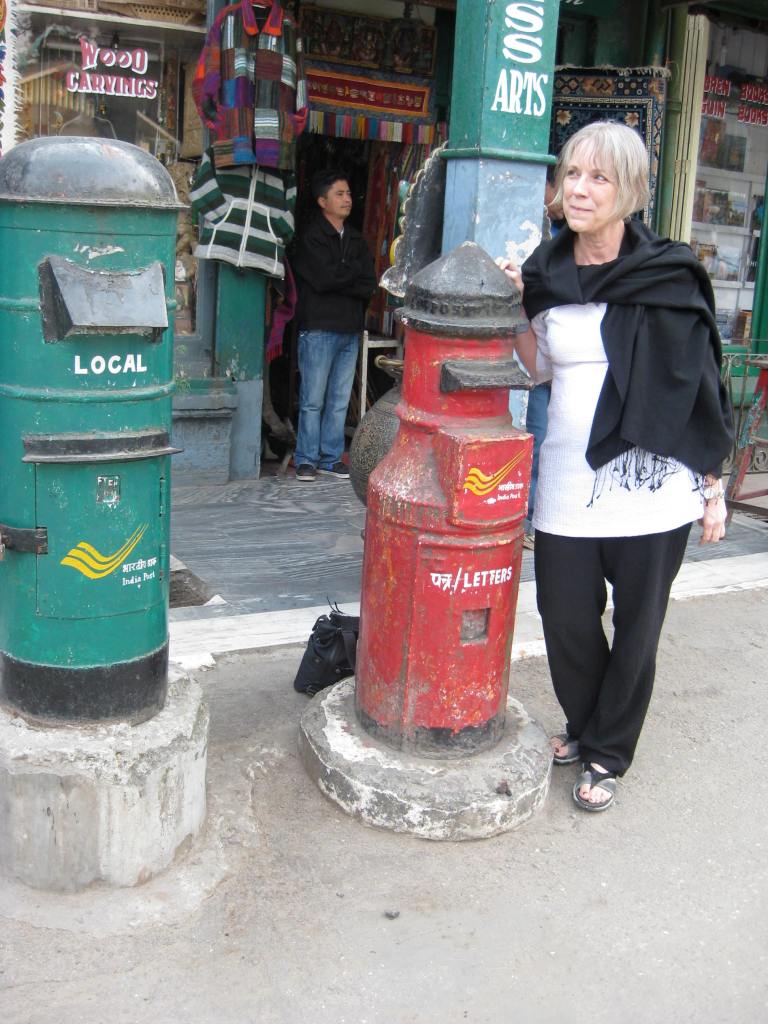
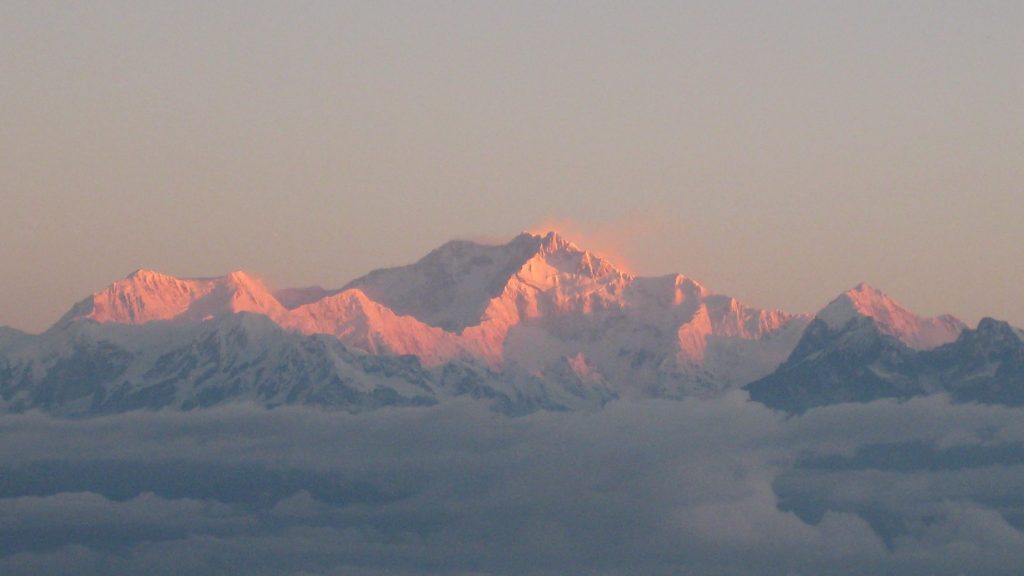
Pictured above: tea picking in a Darjeeling tea garden, Darjeeling town mall, India mail box, Mt. Kanchenjunga (8598 m/28,209 ft) as seen from Tiger Hill
Mt. Everest (8848 m/29,029 ft) can be seen on a clear day.
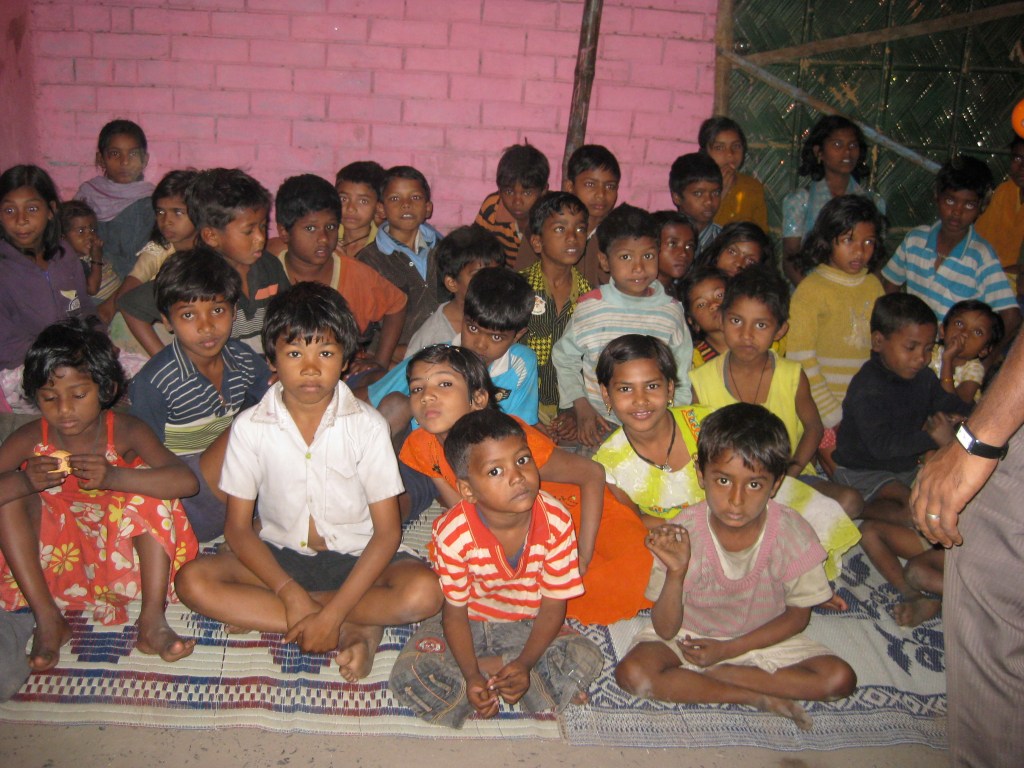
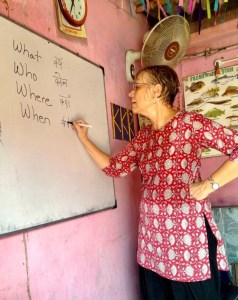
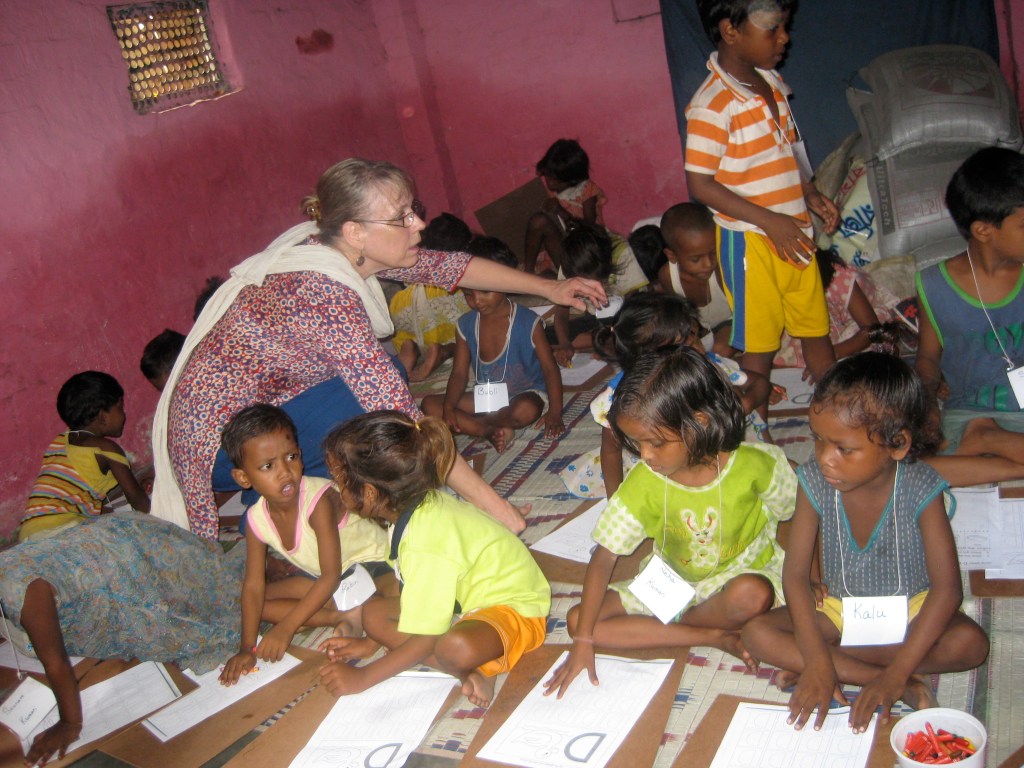
Our adventures together included an overnight train ride north to Darjeeling where we visited emerald green tea gardens, gorged ourselves at a Tibetan cafe, and the next morning sipped Indian masala chai while watching a breathtaking sunrise over the Himalayas from Tiger Hill. In Kolkata we explored neighborhoods, taught and played with the kids in “my” neighborhood, and reveled in the joy of tea in the City of Joy, the former capital of the British Raj.
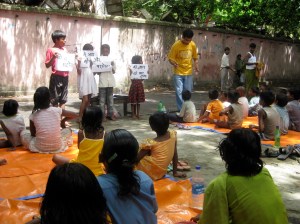

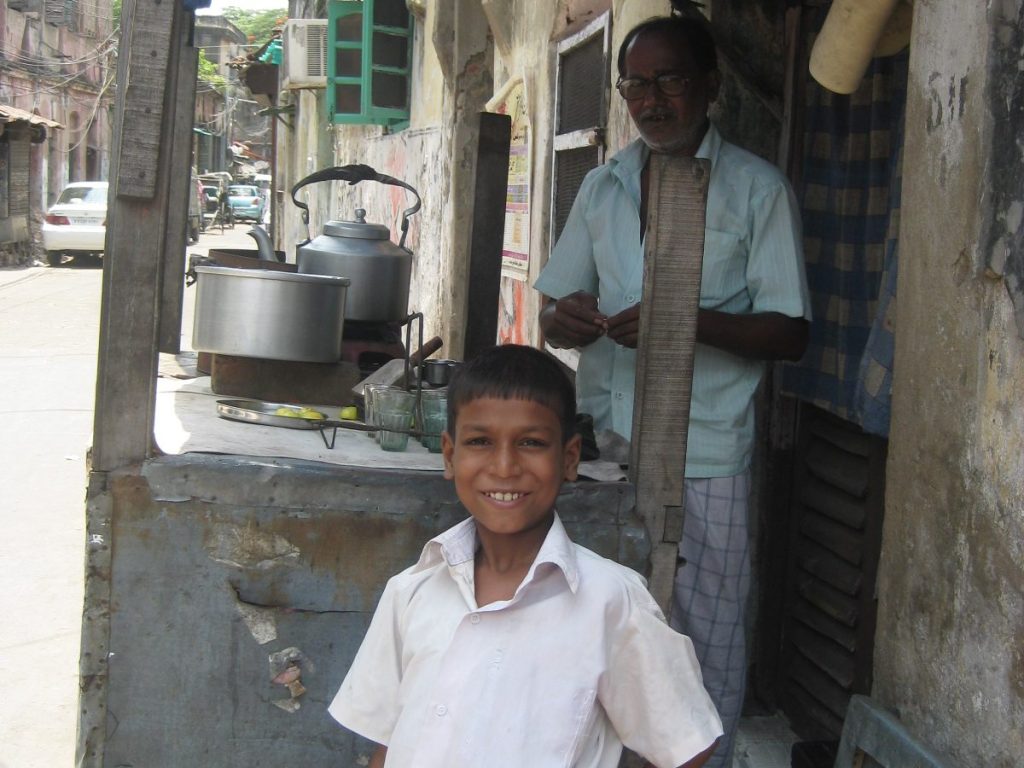
Tea to an Indian is like butter to bread, gravy to mashed potatoes, a horse to a carriage. Tea and biscuits (cookies) for breakfast, mid-morning tea, tea in the afternoon, tea marks the flow of life and in many ways gives life to the citizenry—poorest to richest, youngest to oldest, every tribe and creed—of this magnificent, chaotic, sweltering, beautiful metropolis. (You might enjoy watching the tea tasting process in Kolkata on The Amazing Race, season 18, episode 6.)
water buffalo milk.
Tea in West Bengal is prepared in numerous ways. On sultry afternoons it is often served black with heaps of sugar along with lemon and salt, yes salt perhaps to replace what is lost through the nonstop perspiring that is inherent to the region. I have also on occasion been served tea, iced with a heavenly blend of aromatic spices. But by far the most common and my favorite is masala chai, spiced tea.

A good cup of Indian chai (or cha in Bengali) is not difficult to make. It is simply a blend of black tea, milk, sugar, and spices. Perhaps the most common tea imbibed in Kolkata and north India is made with fresh ginger root and cardamon pods, often called ginger tea. It is delicious. The other recipe that I am familiar with is more exotic. To make this recipe you would also add star anise, nutmeg or mace, black peppercorns, cloves, and cinnamon bark. A mortar and pestle is helpful but not necessary. It is heavenly. (Vanilla is not an Indian flavor and is not found in authentic Indian chai.)
Tea in India is commonly served in many different containers. The American habit of carrying around a huge mug or 20 oz. cup from the drive-through is not practiced in India. Indians drink their tea in small to tiny vessels and everything stops for tea break. It is a sort of ritual preferably shared with family or friends. Tea may be served in a porcelain or china cup, a small glass, or even a coffee mug which would never be filled to the top. As much of life in India is lived in the street, tea is also served on the street in tea stalls. Watching a tea vendor (chai wallah) prepare his delectable potion is mesmerizing. Once the tea is perfect the chai wallah at a sidewalk tea stall will usually serve it in a tiny plastic cup. (www.chaiwallahsofindia.com is a beautiful blog that gives much information about tea and also describes India’s love for the beverage.)
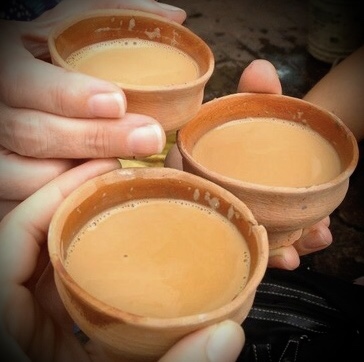
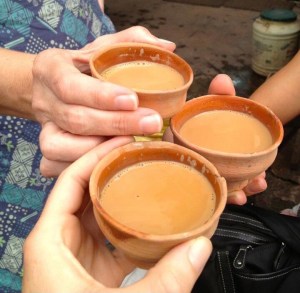
In the City of Joy outside tea is commonly served in small, handmade, unfired clay cups, 2 rupees for the common small cup or 3 rupees for the not quite so small cup. When the tea is ready the vender takes a clay cup, bangs it rim down on the counter to knock out any loose bits of clay, and then fills the cup. The most difficult part of having tea on the street is the moment the chai wallah hands it to you. I am quite sure that its temperature is far above the boiling point. I always found it next to impossible to hold the clay cup unless there was a board or brick nearby to set it on. Finally I learned the art of holding the cup with my thumb on the rim and a finger on the opposite side of the rim or briefly on the bottom. Next comes the period of slurping and gently blowing to cool the concoction till it is actually tepid enough to drink without risk of scalding. It is a most delightful experience. When alas the cup is empty, one simply tosses it to the pavement where it shatters into pieces and is instantly “recycled” into dust.
I am pretty sure that I never drank tea in a Calcutta clay cup without thinking of a lovely picture found in the Bible, “we have this treasure in earthen vessels”. While Kolkata masala chai for me is “treasure in an earthen vessel,” this phrase references something far more important.
A mug is comfortable and a china cup is beautiful. But the handmade clay cup is rough and imperfect, insignificant; it is made for temporary use, holds only a little, and after use is thrown away and broken. It has little value. Its importance is the heavenly nectar it contains. After the tea is poured out to refresh someone its job is done, its life is over, it returns to dust.
My human, earthly body is a clay vessel. It is rough, imperfect, and created for only temporary use. For a few years it houses the eternal part of me, my soul and spirit, and it also is filled with, by my invitation, the presence of God. The thing that’s most important about my body is that it contains this treasure of God’s presence. My purpose is to love God and to pour out his Presence to refresh and encourage those around me. I should be continually being filled and poured out. And then finally one day when it is time for my departure, my body will be thrown to the ground and return to dust and I will move on into an eternal, glorious dwelling.
Augustine of Hippo speaking to God said, “You have made us for yourself, and our hearts are restless till they rest in you.” (Eerdmans’ Book of Famous Prayers)
For I am already being poured out as a drink offering, and the time of my departure has come. I have fought the good fight, I have finished the race, I have kept the faith. Henceforth there is laid up for me the crown of righteousness, which the Lord, the righteous judge will award to me on that Day, and not only to me but also to all who have loved his appearing.
2 Timothy 4:6-8 ESV
For we know that if the tent that is our earthly home is destroyed, we have a building from God, a house not made with hands, eternal in the heavens. For in this tent we groan, longing to put on our heavenly dwelling..so that what is mortal may be swallowed up by life. He who has prepared us for this very thing is God, who has given us the Spirit as a guarantee..we would rather be away from the body and at home with the Lord.
2 Corinthians 5:1, 2, 4b, 5, 8 ESV

- The Collapse
 October 7, 2018. 7 years ago today I left India, so weak I struggled to even board a plane to Bangkok while keeping my possessions together. Passport, wallet, phone, backpack, carryon, passport, wallet, phone, backpack, carryon was my mantra until IContinue reading “The Collapse”
 - Let All Creation Praise
 I was euphoric as two friends and I loaded our belongings onto the roof of a taxi that cool April morning. Dawn was breaking and it would be an incredibly gorgeous Himalayan day. I was embarking onto a new venture, oneContinue reading “Let All Creation Praise”
 - Winds of the Himalaya – Part 30
 That One Time We Had to Build a Bridge to Get Home Lete was the last post in my journal. I am not sure why, likely because I was, after nearly two months, exhausted. Dates and such in this post willContinue reading “Winds of the Himalaya – Part 30”
 - Winds of the Himalaya – Part 29
 Jomsom to Lete Saturday, July 14, 2001, was a long, hard day but the view was incredible and the trek was full of joy and laughter. We set out from Jomsom at 9:00 am. The first leg of our trek wasContinue reading “Winds of the Himalaya – Part 29”
 - Winds of the Himalaya – Part 28
 Kagbeni to Muktinath After breakfast we headed north for the four-hour trek to Muktinath. That stretch is all uphill [Kagbeni – 9200 ft, (2804 m), Muktinath – 12,343 ft (3762 m)] but not so steep as I had expected. There, however,Continue reading “Winds of the Himalaya – Part 28”
 - Winds of the Himalaya – Part 27
 Jomsom to Kagbeni The remainder of our group arrived in Jomsom at 7:30 am. After steamy fresh bread, yak butter, wild honey, eggs, and the ever present and luscious milk tea we began the walk to Kagbeni. Since we would returnContinue reading “Winds of the Himalaya – Part 27”
 - Winds of the Himalaya – Part 26
 Kathmandu to Jomsom Monday, July 9, 2001, started early. The US team of sixteen representing five Alaskan churches, plus Robby and Leona and their Nepali team, and Pastor CB and his wife IB departed Kathmandu by bus at 7:00 am boundContinue reading “Winds of the Himalaya – Part 26”
 - Winds of the Himalaya – Part 25
 Final Days in Kathmandu Sunday morning I awoke feeling better, just weak so I took the day to rest and recuperate. Dudley’s team arrived from California and I moved downstairs to a lovely guest room that Robby and Leona had builtContinue reading “Winds of the Himalaya – Part 25”
 - Winds of the Himalaya – Part 24
 Tibetan Border Trip Friday morning, June 15, Valerie, Dudley, two Nepali friends, and me, with Mr. G. in the driver’s seat headed northeast towards Kodari on the border with Tibet, the same area I had visited with an Alaskan team justContinue reading “Winds of the Himalaya – Part 24”
 - Winds of the Himalaya – Part 23
 Prayer at the Palace Before breakfast on Friday, June 8, I headed to Himalayan Ezra Institute on foot since it is an easily walkable distance from Robby and Leona’s house. It was a lovely walk and I was accompanied by allContinue reading “Winds of the Himalaya – Part 23”
 Coffee, Tea, and Reverie
Beautiful as always! Made me miss the chai on the street experience!
LikeLiked by 1 person
It is a wonderful part of the culture!
LikeLike
An absolutely lovely blog. I love the tea-talk. My Dad was a tea drinker and could slerp it down boiling hot. I thought of his love for a “chaska chai” any time of day while reading this. He would leave the last syrupy slurp for which ever child was at hand. Thanks for your beautiful words.
LikeLiked by 1 person
Thank you, friend. I am a coffee drinker but I do love tea as well and have so many good memories wrapped around tea.
LikeLike